

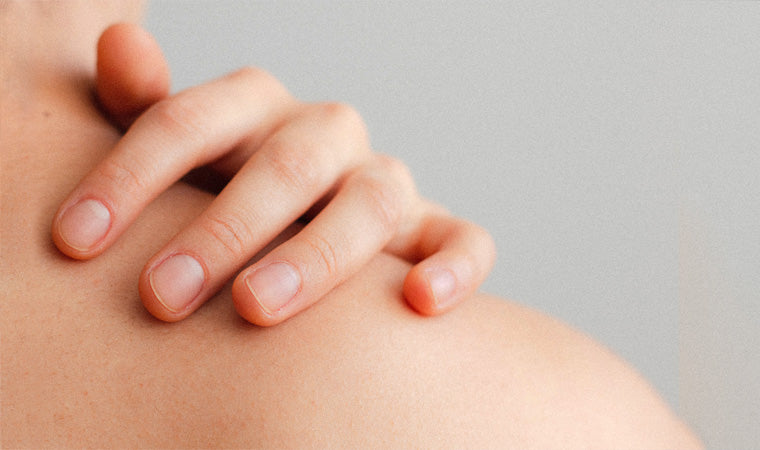

Sensitive skin is skin that reacts in an exaggerated manner to stimuli that have no effect on so-called “normal” skin. It reacts to many external factors such as cosmetics, the environment and diet. These factors can cause or make skin sensitivity worse.
|
YOUR SKIN REGULARLY FEELS TIGHTNESS, TINGLING AND WARMING
Skin sensitivity can be expressed in two ways: – “ Irritable ” sensitive skin: inflammatory reaction without recognition of a specific allergen. – “ Allergic ” sensitive skin: A specific immune reaction to an allergen. Sensitive, reactive, intolerant skin are common names for “ irritable ” sensitive skin. |
|

|
|
FOCUS ON THE CAUSES OF SKIN SENSITIVITY
The perfumes are the leading cause of allergic reactions and irritation to cosmetics. Finally, aesthetic treatments leaving the skin weakened should be used sparingly. Skin sensitivity can also be caused by other exogenous factors such as the environment : pollution, wind, temperature variations… or the consumption of stimulants : alcohol, spices, hot drinks… Genetic predisposition or other endogenous factors can also aggravate it or be at its origin. People with skin pathologies such as seborrheic dermatitis, rosacea, perioral dermatitis, psoriasis, or atopic dermatitis already have an altered skin barrier. This is why they are more likely to experience symptoms of skin sensitivity. Psychological state can also be an important element in the appearance of skin sensitivity, such as strong emotions, stress or depression. It is the temporary or permanent combination of these factors that will cause skin sensitivity. |

|
FOCUS ON THE CAUSES OF SKIN SENSITIVITY
The perfumes are the leading cause of allergic reactions and irritation to cosmetics. Finally, aesthetic treatments leaving the skin weakened should be used sparingly. Skin sensitivity can also be caused by other exogenous factors such as the environment : pollution, wind, temperature variations… or the consumption of stimulants: alcohol, spices, hot drinks… Genetic predisposition or other endogenous factors can also aggravate it or be at its origin. People with skin pathologies such as seborrheic dermatitis, rosacea, perioral dermatitis, psoriasis, or atopic dermatitis already have an altered skin barrier. This is why they are more likely to experience symptoms of skin sensitivity. Psychological state can also be an important element in the appearance of skin sensitivity, such as strong emotions, stress or depression. It is the temporary or permanent combination of these factors that will cause skin sensitivity. |
|
MULTIPLE CLINICAL SIGNS
The specificity of sensitive skin is that it mainly has subjective clinical signs, which are difficult to evaluate. It involves tightness , tingling and heating of different intensities. The itching is often weak or absent.
Objective signs are less clearly defined, sometimes they are completely absent. These include redness , small erythema , slight flaking and cracking .