
When the skin barrier is impaired, it no longer plays its protective role
The skin becomes uncomfortable: it feels tight, itchy, and has red areas.
In 2003, Guillaume Bernard from Louis Pasteur University of Strasbourg published his research on the allergenic nature of fragrance¹. This study planted the seed, in the minds of a group of dermatology and formulation experts, for the desire to create the first brand free of fragrance and fragrance allergens.
Research on the exposome by Dr. Christopher Wild, published in 2005², ultimately convinced these experts: they wanted to go further and study the impact of modern life on the increasing number of people reporting sensitive skin.
This is how Dermina was born in 2005, creating its own research and formulation laboratory in Paris.
Its approach? To focus on two of the main factors contributing to skin sensitization: fragrance and the exposome.
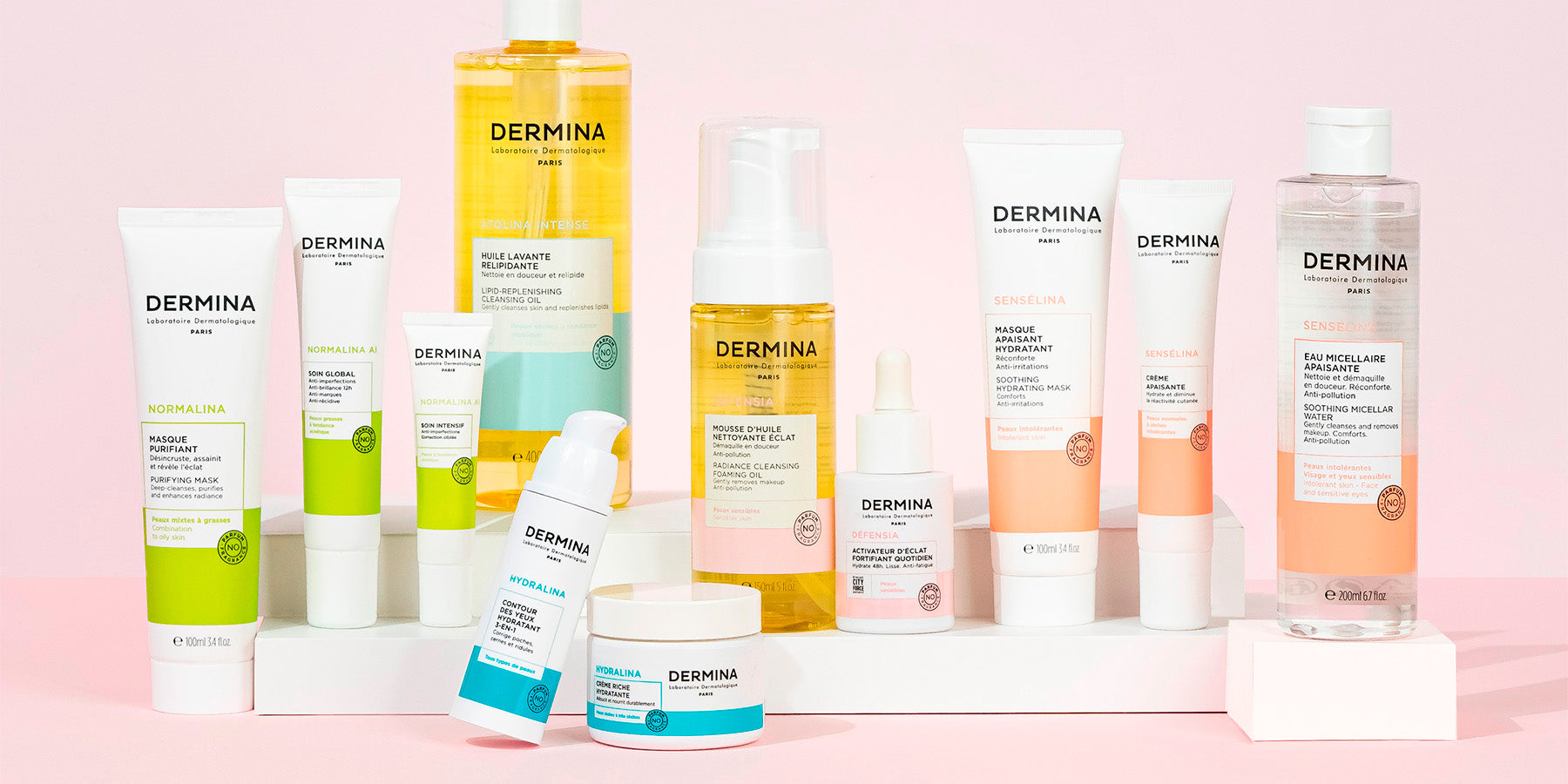
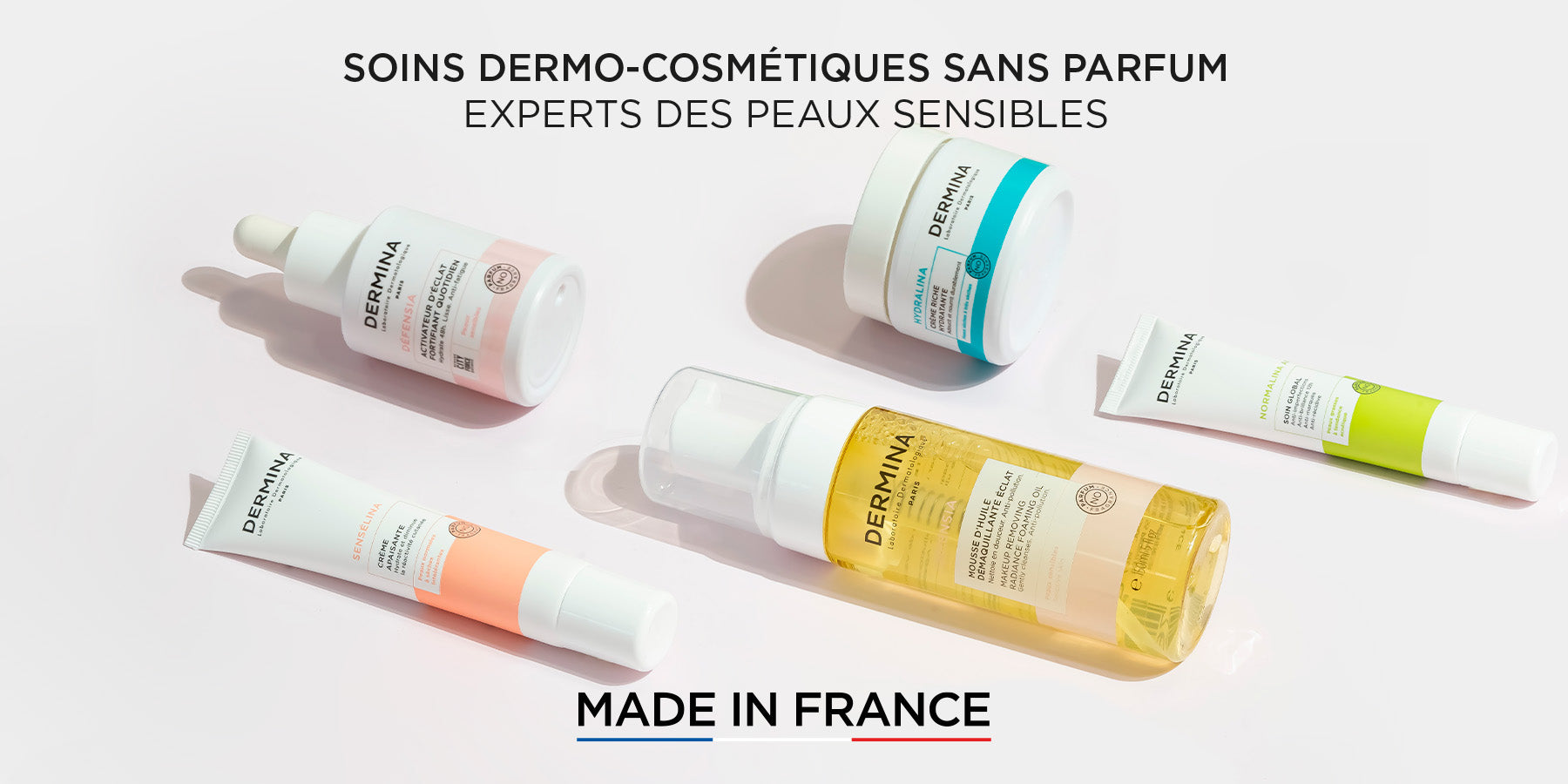
Guaranteed 100% fragrance-free, Made in France, and tested only on sensitive skin, regardless of skin type, Dermina positions itself as the skincare brand that meets the needs of the most demanding fragile or sensitive skin.
¹Contact allergy to fragrances: Identification and isolation of allergens contained in a complex natural mixture. Synthesis of sensitizing aldehydes labeled with carbon-13 and study of their interactions with skin proteins - Guillaume Bernard, Louis Pasteur University of Strasbourg, 2003²Christopher Paul Wild; Complementing the Genome with an "Exposome": The Outstanding Challenge of Environmental Exposure Measurement in Molecular Epidemiology. Cancer Epidemiol Biomarkers Prev 1 August 2005; 14(8): 1847-1850
³European Commission, Scientific Committee on Consumer Safety, Opinion on fragrance allergens in cosmetic products (SCCS/1459/11), 2012
Perfume, responsible for 45% of skin allergies¹
If the word “perfume” is used in everyday language, we forget that there are more than 2,500 different components³ that are hidden under its umbrella. In our societies where information circulates constantly and transparency is essential, this fact resonates as a paradox. However, perfume is the cause of 45% of skin allergies. And if the world of drugstores wants to be reassuring and embodies a certain safety, 99% of its dermo-cosmetic offering contains this famous ingredient that can be sensitizing, used to make the application of a treatment more sensory.
Dermina takes up the challenge of offering care without perfume or perfume allergens, without compromising sensoriality thanks to high formulation requirements and by allowing minimalist and better-tolerated formulas. Because compliance is the key factor in the success of a routine, particular attention was paid to the quality of the textures, which explains the success and repurchase rate of Dermina treatments among consumers.
¹Contact allergy to perfumes: Identification and isolation of allergens contained in a complex natural mixture. Synthesis of sensitizing aldehydes marked with carbon 13 and study of their interactions with skin proteins - CGuillaume Bernard, University of Louis Pasteur of Strasboirg, 2003²Christopher Paul Wild; Complementing the Genome with an “Exposome”: The Outstanding Challenge of Environmental ExposureMeasurement in Molecular Epidemiology. Cancer Epidemiol Biomarkers Prev 1 August 2005; 14 (8): 1847-1850
³European Commission, Scientific Committee on Consumer Safety, Opinion on fragrance allergens in cosmetic products (SCCS/1459/11), 2012
FOCUS ON THE EXPOSOME
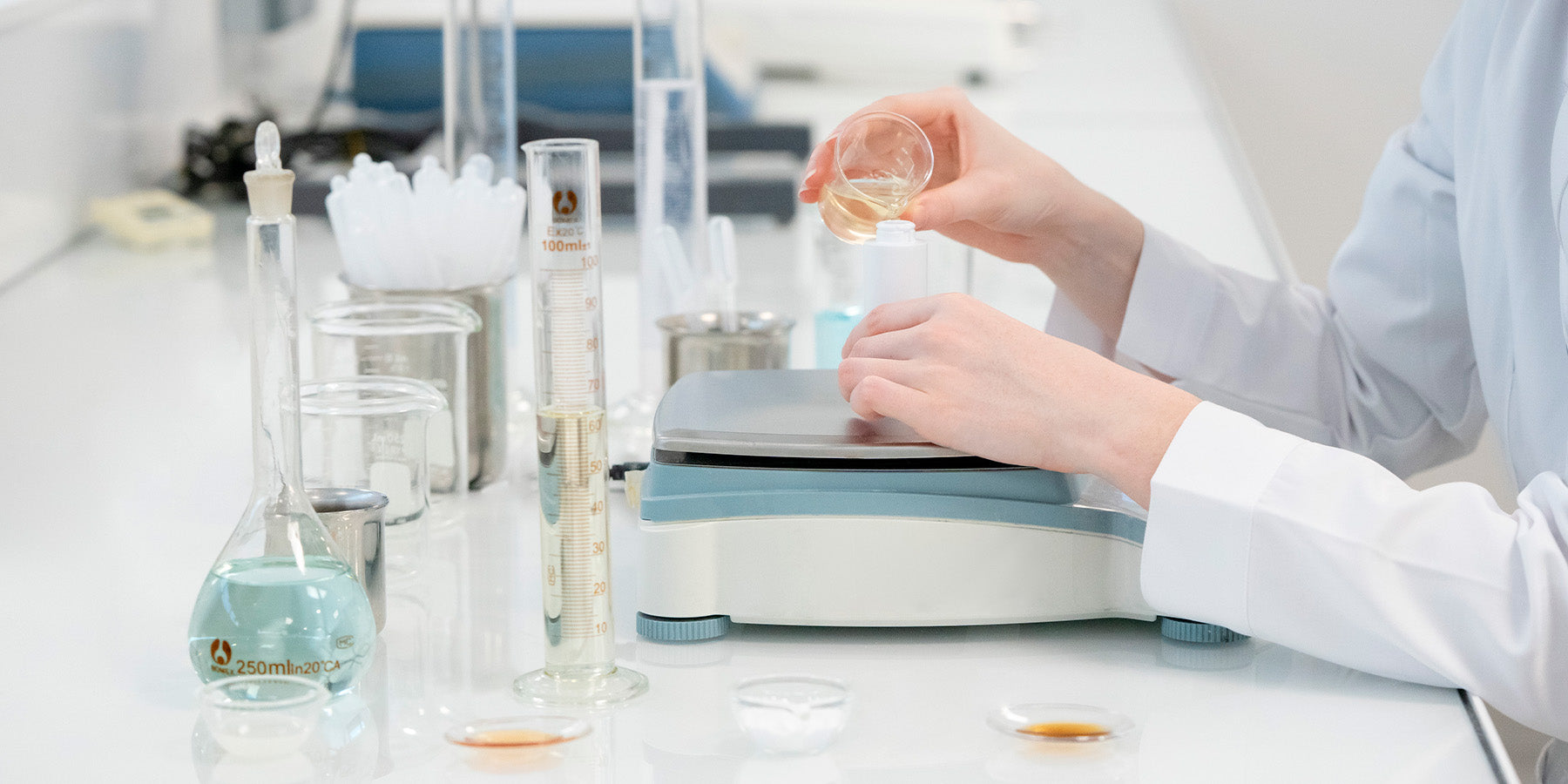
Convinced of the influence that all environmental exposures have on the skin, Dermina has made the exposome a priority to help sensitive skin. While some skin reactions can be attributed to psycho-emotional shock or chronic stress, as the brain and skin are intimately linked, damaged skin can also be the result of exposure to UV, blue light, cigarette smoke, and pollution. This is where DERMINA Laboratory's exclusive City-Proof® formulation technology comes in, whose shield effect forms a protective film on the skin and prevents the adhesion of pollutant particles, even the finest (PM 2.5).
It's proven: it prevents the adhesion of an average of 97% of pollutant microparticles¹, and this score can go up to 99.7%.
¹Average of instrumental anti-pollution efficacy tests on volunteers (10 volunteers per test).
EXCLUSIVE TECHNOLOGIES AND PATENTS
The City-Force® patent protects skin weakened by the exposome. It repairs the skin barrier in 24 hours, reduces epidermal reactivity, and protects the dermis from oxidation.
The AKN-Block® patent purifies the skin and makes it clearer thanks to its antioxidant and soothing effectiveness against external aggressions that can worsen acne and cause its recurrence.
LIGHT-BLOCK® technology, with its PA++++ and SPF50+ rating, protects the skin from UVA, UVB, infrared rays, and visible light (including blue light).
¹Average of instrumental tests of anti-pollution efficacy on volunteers (10 volunteers per test).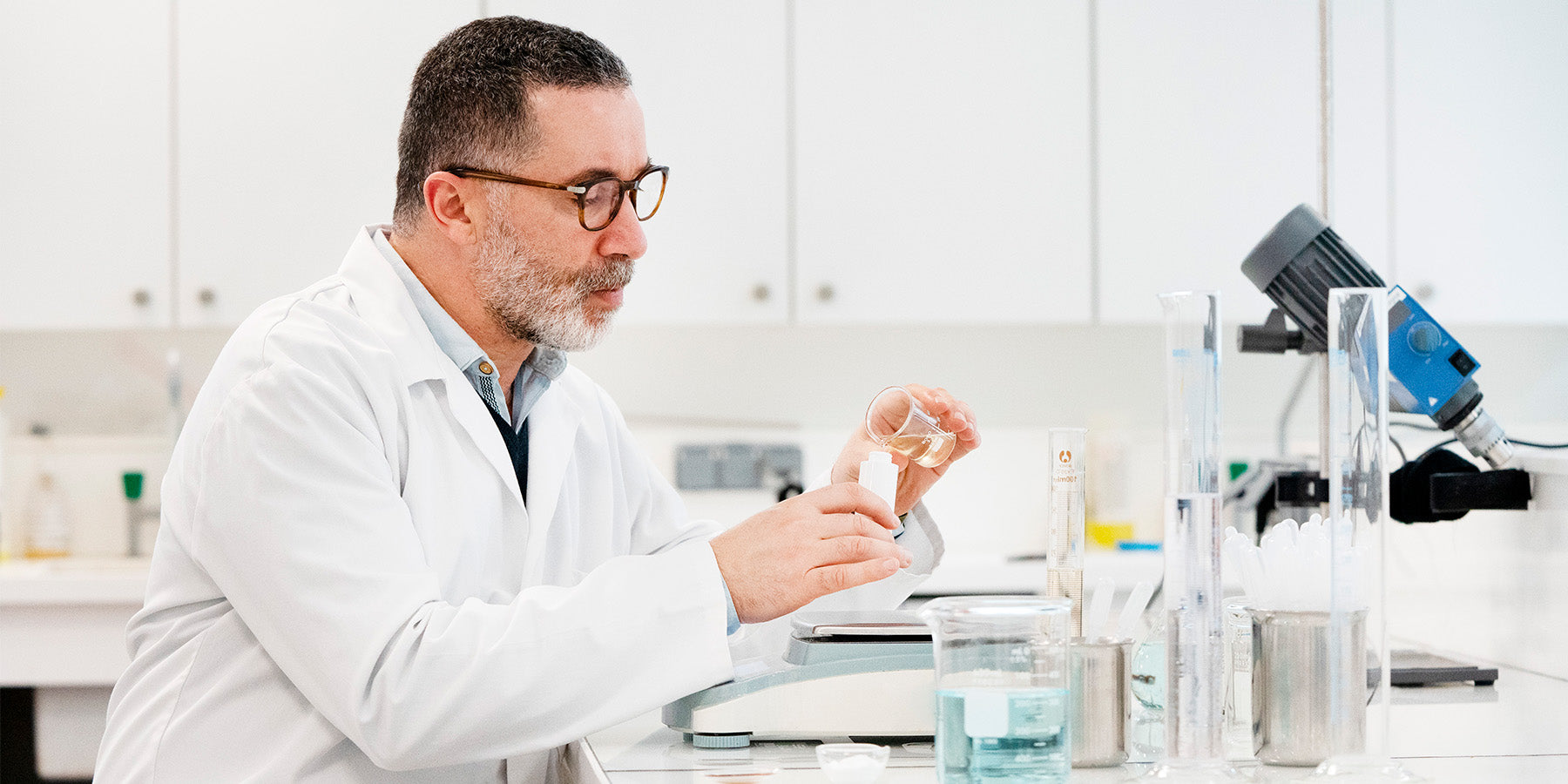
1. THE EXPERT IN SENSITIVE SKIN
// 100% of products are tested on sensitive skin.
// An extremely demanding formulation, free of fragrance and fragrance allergens¹.
// Airless packaging for minimal preservatives.
// A strict and rigorous selection of raw materials.
2. PROVEN EFFECTIVENESS
// Dermatological active ingredients incorporated at their optimal concentration for maximum effectiveness.
// Rigorous usage tests, under the supervision of a dermatologist (5000+ volunteers).
// Creams that act as a shield against over 97% of pollution particles², even the finest (PM 2.5).
3. SENSORIAL TEXTURES
// Melting textures with a non-greasy finish.
// Feather-light textures that let the skin breathe.
// True formulation achievements to convey dermatological performance in subtle emulsions.
4. A MADE IN FRANCE AND ECO-RESPONSIBLE BRAND
// Our own integrated exclusive Research & Development laboratory in Paris.
// Our regulatory team supervises on-site the conformity and safety of products placed on the market, as well as the tolerance and effectiveness tests of the skincare products.
// Exclusively French manufacturing.
// Eco-responsible packaging made from FSC-certified cardboard and printed with vegetable inks.
¹Without added fragrance.
²Average of instrumental anti-pollution effectiveness tests on volunteers (10 volunteers per test).